
Medically reviewed by Dr. Nikash Patel, MD.
Short answer: lymphatic drainage supports the body’s natural system for moving fluid and waste. When lymph flow is working well, many people notice less puffiness and bloating, a lighter feeling in the legs, better circulation, and support for the immune system. You can encourage healthy lymph flow with movement, hydration, deep breathing, and machine-based treatments such as pressotherapy. Here is what the lymphatic system does and how to support it.
What is the lymphatic system?
The lymphatic system is a network of vessels and nodes that carries a clear fluid called lymph. It works alongside the circulatory system to move fluid, filter waste, and support immune function. Unlike the heart, the lymphatic system has no pump of its own — it relies on movement, muscle contractions, and breathing to keep lymph flowing.
What are the benefits of lymphatic drainage?
When lymph circulation is healthy, people often report benefits such as reduced fluid retention and puffiness, a lighter and less “heavy” feeling in the legs, improved circulation, and support for the body’s natural waste-clearing processes. Because fluid balance also affects how skin looks, better lymph flow can support smoother-looking skin. These are wellness-oriented benefits — supportive, not a cure for any medical condition.
How can you support lymphatic drainage?
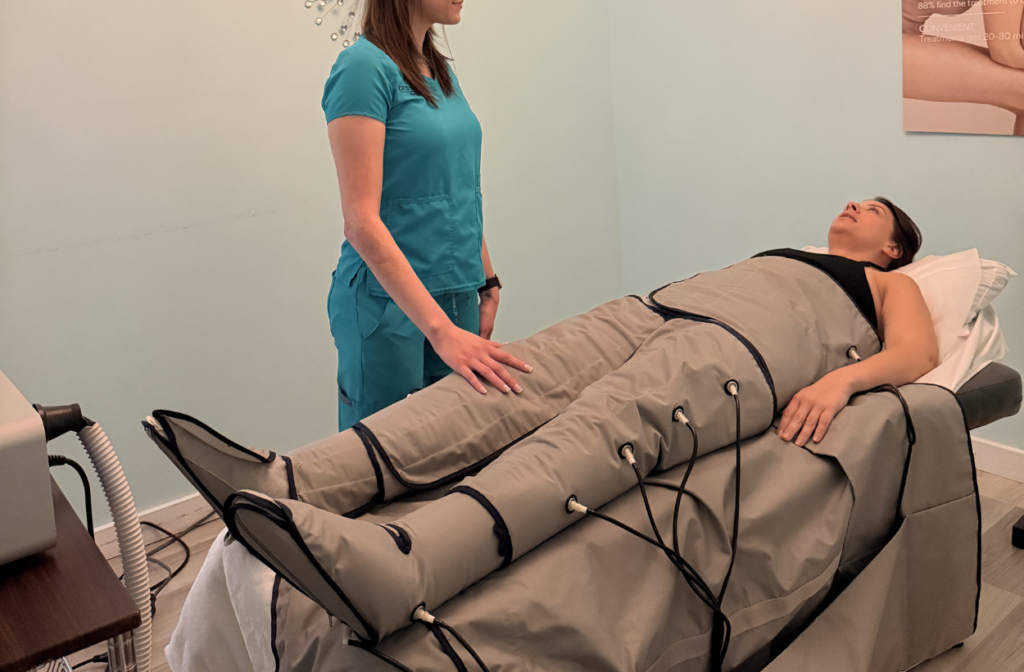
Daily habits do a lot of the work: regular movement (even walking), staying well hydrated, and deep breathing all help move lymph. Beyond habits, machine-based treatments can help stimulate circulation and fluid movement. At Cryo Studio Sarasota we use Pressotherapy, a compression-based treatment that gently inflates and deflates in sequence to encourage lymph flow, and Icoone, an equipment-based technology that supports microcirculation and drainage. Both are machine-based — not manual massage.
Is lymphatic drainage the same as a detox?
Not exactly. Your body already detoxifies continuously through the liver, kidneys, and lymphatic system. The goal is not to “detox” the lymphatic system itself, but to support healthy lymph flow so the body can move fluid and waste efficiently. That is why many people drink more water and notice they use the restroom more after a session — the body is simply processing fluid.
Ways to support healthy lymph flow
| Method | How it helps |
|---|---|
| Movement & exercise | Muscle contractions push lymph through the vessels |
| Hydration | Lymph is mostly water; fluid intake supports flow |
| Deep breathing | The diaphragm helps move lymph through the chest |
| Pressotherapy (machine-based) | Sequenced compression encourages fluid movement |
Who is a good candidate for lymphatic support — and who should wait?
Lymphatic-supporting treatments are wellness tools, not medical treatments, and they suit some situations better than others. Many people use them when they feel puffy, heavy in the legs, bloated after travel, or when they want to support recovery and circulation as part of a broader routine.
There are also times to pause and check with a licensed clinician first. If you have a history of blood clots (such as DVT), an active infection or fever, heart or kidney conditions, uncontrolled high blood pressure, or if you are pregnant, machine-based compression may not be appropriate without medical clearance — and the same is true during active cancer treatment. We review your health history at your consultation and, when needed, ask you to confirm with your own clinician before we begin.
What to expect during and after a pressotherapy session
A session is straightforward and comfortable. You relax in specialized compression garments — usually boots or sleeves — while the machine inflates and deflates in a rhythmic sequence for roughly 30 to 45 minutes. Most people find it relaxing; there are no needles and no downtime, so you can return to your day right after.
Afterward, it is common to feel lighter in the legs and to want more water. Many people also notice they use the restroom more than usual — that is simply the body processing and moving fluid, which is the goal. Benefits are gradual: a single session can feel good, but the most noticeable results come from a series combined with everyday habits like movement and hydration. Results vary from person to person, and this is about supporting your body’s natural processes rather than forcing a change.
Do machine-based treatments replace healthy habits?
No — they work best alongside them. Movement, hydration, and deep breathing keep lymph moving day to day, while equipment-based sessions like pressotherapy and Icoone add focused, sequenced stimulation that is hard to replicate at home. Treating them as partners rather than an either/or gives the most consistent support for circulation and fluid balance over time.
Two common myths about lymphatic drainage
“It detoxes your body.” Your liver, kidneys, and lymphatic system already detoxify continuously. Supporting lymph flow simply helps the body do that job efficiently — it does not add a separate “detox.”
“More pressure is better.” Gentle, sequenced compression is what encourages healthy lymph movement. Aggressive pressure is not the goal, which is one reason machine-based pressotherapy uses controlled, rhythmic cycles rather than force.
Frequently asked questions
Is pressotherapy the same as a lymphatic massage?
No. Pressotherapy is a machine-based compression treatment. It uses garments that inflate and deflate in sequence to encourage lymph flow — it is not manual massage.
How often should I do lymphatic-supporting treatments?
It depends on your goals. Many people combine regular movement and hydration with a series of machine-based sessions. We recommend a cadence at your consultation.
Who should be cautious with lymphatic treatments?
Certain medical conditions require a clinician’s guidance first. If you have a health condition, talk with a licensed clinician before starting; we review your history at your consultation.
Will lymphatic support help with bloating and puffiness?
Many people notice reduced puffiness and a lighter feeling when lymph flow is supported. Results vary from person to person.
Does lymphatic drainage help you lose weight?
No. Lymphatic support is not a fat-loss treatment. It helps the body move fluid, so any change is related to reduced water retention and puffiness — not fat. It works best alongside a healthy routine.
How soon will I notice benefits, and how long do they last?
Many people feel lighter soon after a session. More noticeable benefits build over a series combined with everyday habits like movement and hydration, and they are maintained over time rather than permanent. Timing varies from person to person.
Why do I use the restroom more after a session?
That is expected. As lymph flow is supported, your body moves and processes more fluid, so it is normal to feel thirstier and to use the restroom more afterward.
Supporting healthy lymph flow is a simple, effective part of overall wellness. Schedule a consultation with Cryo Studio Sarasota to see what fits your goals. — Cryo Studio Medical Team