
Short answer: a dermaplaning facial is a gentle exfoliating treatment that uses a sterile blade to remove dead surface skin and fine “peach fuzz,” leaving the face smoother, brighter, and better prepped for skincare and makeup. It is quick, comfortable, and has little to no downtime. Here is what it does, what to expect, and the truth about whether hair grows back thicker.
What is a dermaplaning facial?
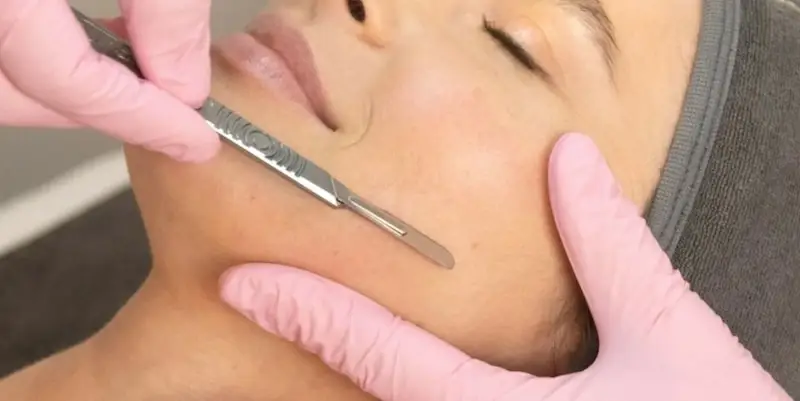
Dermaplaning is a form of physical exfoliation. A trained provider holds the skin taut and uses a sterile blade at a precise angle to gently lift away dead skin cells and vellus hair (the soft, fine fuzz on the face). It works on the surface only — there are no needles and no injections — and it is often included as one step within a larger facial.
What are the benefits of dermaplaning?
By removing the dull, dead layer and fine hair, dermaplaning can leave skin looking smoother and brighter right away. It also helps skincare products absorb better and gives makeup a smoother canvas. Many people add it to a facial series to support an even, radiant look over time. Results are appearance-based and build best with consistency.
Does dermaplaning hurt, and is there downtime?
Most people find dermaplaning painless — it feels like a light scraping sensation, not a cut. There is typically little to no downtime, though skin may look slightly pink briefly. If it is paired with more active steps like a light chemical peel, you might have mild sensitivity for a short period. We explain exactly what to expect before we begin.
Will facial hair grow back thicker after dermaplaning?
No — this is a common myth. Dermaplaning removes fine vellus hair at the surface. It does not change the hair follicle, so the hair grows back the same way it was before, at the same texture. It does not turn into coarse or darker hair.
How does dermaplaning fit into a facial plan?
Dermaplaning is often one step in a structured treatment. At Cryo Studio Sarasota it can be combined with a deep cleanse, extractions, a light chemical peel, and a cryo facial finish for a smoother, more refreshed look. For equipment-based facial skin and wellness work, we also offer Icoone facial treatments as part of a broader plan. At your consultation we recommend the right combination for your skin.
Dermaplaning at a glance
| Feature | What to know |
|---|---|
| What it does | Removes dead skin + fine facial hair for a smoother, brighter look |
| Comfort | Typically painless; light scraping sensation |
| Downtime | Little to none; possible brief pinkness |
| Best results | As part of a facial series, with good sun protection |
Who is a good candidate for dermaplaning — and who should skip it?
Dermaplaning suits a lot of people — especially anyone who wants a smoother, brighter surface, has noticeable peach fuzz, or wants makeup to sit more evenly. It works on many skin types and is a gentle, no-downtime way to exfoliate.
It is not for everyone, though. If you have active acne or breakouts, an active cold sore, a fresh sunburn, or very reactive, rosacea-prone skin, dermaplaning may not be the right choice right now — running a blade over inflamed or broken skin can aggravate it. We look at your skin first and, if dermaplaning is not ideal that day, we recommend a gentler option.
Dermaplaning vs. other kinds of exfoliation
Exfoliation comes in a few forms, and they do different things. Dermaplaning is physical exfoliation — a blade lifts away dead skin and fine hair. A light chemical peel uses gentle acids to loosen dead cells and refine tone and texture at a slightly deeper level. A facial scrub buffs the surface manually. None is “better” across the board; the right choice depends on your skin and goal, and they are often combined within a plan.
| Method | How it works | Best for |
|---|---|---|
| Dermaplaning | Blade removes dead skin + peach fuzz | Smoother, brighter surface; makeup prep |
| Light chemical peel | Gentle acids loosen dead cells | Tone and texture refinement |
| Facial scrub | Manual buffing of the surface | Light at-home upkeep between visits |
What to expect before and after your dermaplaning facial
Before your appointment, come with clean skin and skip strong actives (like retinoids or acids) for a day or two beforehand, since your skin will be freshly exfoliated. The treatment itself is quick and typically painless.
Afterward, skin often looks immediately smoother and brighter, though you may have brief pinkness. Because the surface is freshly exfoliated, sunscreen is especially important, and it is best to avoid harsh actives for about a day. We give you specific aftercare based on exactly what was done.
Honest limitations of dermaplaning
Dermaplaning works on the surface, so it is not a fix for deep wrinkles, pigment concerns, or active acne — those need different approaches. Results are also temporary: as your skin naturally renews, the smoothness fades, which is why many people repeat it on a regular cadence. It is a helpful, low-commitment step, not a one-time transformation.
Frequently asked questions
How often should I get a dermaplaning facial?
Many people benefit from dermaplaning on a regular cadence as part of a facial routine. Because it exfoliates the surface, spacing sessions appropriately matters — we recommend timing at your consultation.
Is dermaplaning safe for all skin types?
Dermaplaning suits many skin types, but it is not ideal for active acne or certain skin conditions. We assess your skin first and recommend the best approach for you.
Can I wear makeup after dermaplaning?
Yes, usually right away, and makeup often goes on more smoothly. If active products were used, we may suggest waiting briefly — we’ll advise based on your treatment.
Is dermaplaning the same as shaving?
Not quite. Both remove surface hair, but dermaplaning also exfoliates dead skin using a precise blade and technique in a professional setting, for a smoother, brighter result.
How long do dermaplaning results last?
Because it exfoliates the surface, the smooth, bright effect typically lasts a few weeks as your skin renews. Many people maintain it with regular sessions.
Can dermaplaning cause breakouts?
For suitable candidates it usually does not. It is not recommended over active acne, which can be aggravated by the blade, so we assess your skin first.
Do I need to avoid the sun afterward?
Yes. Freshly exfoliated skin is more sensitive to UV, so daily sunscreen and limiting sun exposure right after are important.
A dermaplaning facial is a simple way to reveal smoother, brighter-looking skin — especially as part of a plan built around your goals. Schedule a consultation with Cryo Studio Sarasota. — Cryo Studio Team